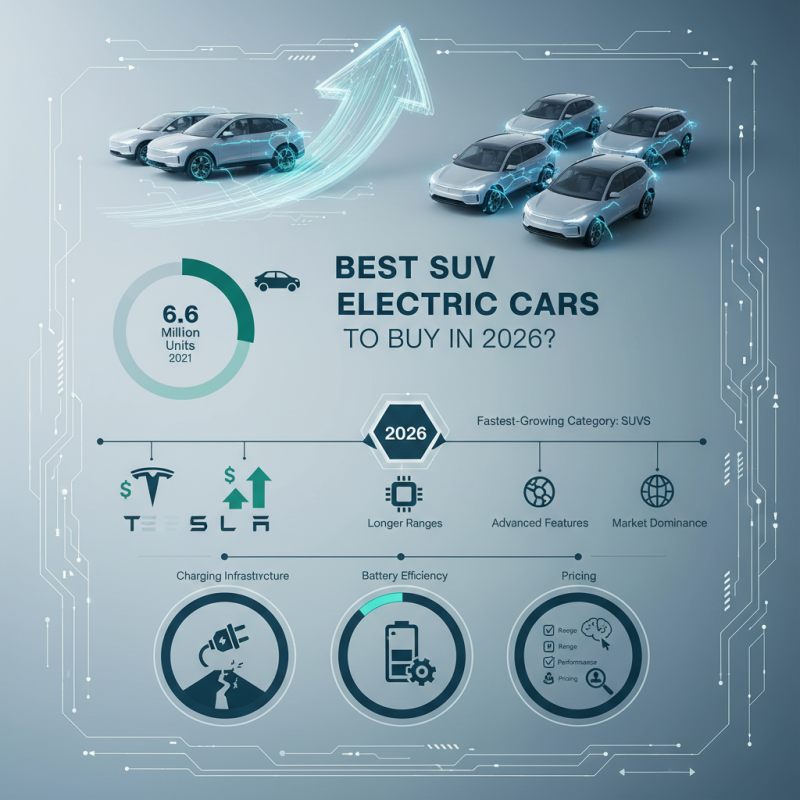
As the automotive industry navigates the transition towards sustainability, the SUV electric car segment is gaining momentum. According to the International Energy Agency (IEA), global electric vehicle sales reached 6.6 million units in 2021, with SUVs becoming the fastest-growing category. This rise reflects changing consumer preferences and the need for environmentally friendly alternatives.
In 2026, SUV electric cars are expected to dominate market trends. Analysts predict that the demand for electric SUVs will surge as more manufacturers introduce models with longer ranges and advanced features. Major brands, including Tesla and Ford, are investing heavily in electric vehicles, shaping a competitive landscape. Yet, challenges remain. Issues such as charging infrastructure and battery efficiency need further development.
Despite the progress, choosing the best SUV electric car can be daunting. With numerous options available, understanding features like range, performance, and pricing is crucial. The SUV electric car market is evolving rapidly, but it’s vital for consumers to stay informed and consider their individual needs. Making an informed decision today is essential for a sustainable future.
Overview of the Electric SUV Market Trends in 2026
The electric SUV market is evolving rapidly. By 2026, consumers can expect a diverse range of options. More manufacturers are entering the market, focusing on sustainability and innovative features. Buyers will look for efficiency, long-range capabilities, and advanced technology.
Tips: Consider your lifestyle. Assess your driving needs, seating capacity, and cargo space requirements before selecting an electric SUV.
Battery technology is also improving. Many upcoming models will feature better charging speeds and enhanced range. This change makes electric SUVs more appealing to a broader audience. However, reliability still varies between manufacturers.
Tips: Research model reviews and consult experts. This step can help you make an informed decision.
While the market is exciting, challenges remain. Infrastructure for charging stations still needs development in many areas. Inconveniences may arise if you live in regions with limited access. The trade-off between range and performance also requires careful consideration.
Top Electric SUV Models Expected to Launch in 2026
The electric SUV market is poised for incredible expansion in 2026. Many new models are expected to debut, offering diverse options for eco-conscious consumers. Features like extended range and fast charging are becoming the norm. Anticipation surrounds these advancements. Some new SUVs may disappoint if they fail to deliver optimal efficiency or comfort.
With exciting features like augmented reality displays and advanced safety technology, innovations will likely redefine the driving experience. However, potential buyers should look for tangible improvements. If the promised range does not match reality, enthusiasts may feel let down. Additionally, charging infrastructure remains a concern for many.
While the looks and tech are crucial, reliability must not be overlooked. Many electric SUVs still struggle with battery life and maintenance challenges. It’s essential to consider customer reviews and expert opinions. A model may shine in design but falter in practice. Therefore, staying informed will empower buyers in making choices that align with their needs and expectations.
Key Features to Consider When Buying an Electric SUV
When considering an electric SUV, prioritize key features that enhance your driving experience. One essential factor is battery range. Many electric SUVs boast impressive ranges, yet this varies significantly among models. A range of 250 miles or more is ideal for long trips. Look for vehicles offering fast charging options. This feature reduces downtime, allowing you to recharge in minutes rather than hours.
Comfort and technology also play crucial roles. Spacious interiors provide comfort for passengers. Advanced infotainment systems keep you connected on the go. Make sure to test the tech interface before buying. Sometimes, what looks good on paper can be frustrating in practice. Consider vehicle size too. A compact SUV may offer agility, while a larger one could provide better storage.
**Tips:** Research safety ratings, too. Electric models may have different safety features compared to traditional SUVs. Always check reviews from reliable sources to evaluate performance and reliability. Pay attention to warranty coverage, especially for the battery. This is vital as replacements can be costly. Test drive multiple options to find the best fit for your lifestyle.
Comparison of Electric SUV Range, Performance, and Pricing
As electric SUVs gain popularity, understanding their range, performance, and pricing becomes essential for potential buyers. Many models in 2026 promise impressive ranges, often exceeding 300 miles on a single charge. This significant range alleviates concerns about range anxiety, allowing drivers to plan longer trips with confidence. However, it’s important to remember that range can vary based on driving conditions, weather, and driving habits.
Performance is another key aspect to consider. Many electric SUVs now offer rapid acceleration and responsive handling. Some models have sports car-like features, making them thrilling to drive. However, the weight of the battery can affect dynamic performance. Some buyers might miss the agility of traditional SUVs. Additionally, while many models come equipped with advanced technology, not all systems are user-friendly. New users may find these features overwhelming or not as intuitive as expected.
Pricing presents another challenge. While electric SUVs may have higher upfront costs, ongoing savings on fuel and maintenance can balance the equation. Buyers should weigh the initial investment against long-term savings. Additionally, government incentives can further reduce the overall cost. Overall, potential buyers must carefully evaluate these factors to find the right fit. Misjudging any of these elements could lead to disappointment in the ownership experience.
Environmental Impact and Benefits of Electric SUVs in 2026
As the demand for electric vehicles (EVs) rises, the impact of electric SUVs is becoming increasingly significant. In 2026, electric SUVs are projected to reduce carbon emissions by an estimated 1.5 billion tons annually, according to the International Energy Agency. This shift toward electrification is crucial in combating climate change.
Electric SUVs are generally more efficient than traditional gas-powered vehicles. They convert over 60% of electrical energy from the grid to power at the wheels. In contrast, gasoline vehicles only convert around 20% of the energy stored in gasoline. This efficiency means less reliance on fossil fuels, leading to decreased air pollution in urban areas.
Tips: Consider the charging infrastructure in your area. Accessible charging can enhance your EV experience significantly. Moreover, research potential vehicle ranges and battery life to avoid unpleasant surprises. The transition to electric isn't seamless for everyone, and there may be factors to weigh, such as the initial purchase cost compared to long-term savings.
Moreover, the production of electric SUVs also demands attention. While they offer environmental benefits during use, battery manufacturing has its costs. Mining for lithium and cobalt can lead to ecological damage and labor issues. The industry must address these challenges as it continues to grow.
FAQS
: The market is growing with diverse options and a focus on sustainability and innovative features.
Assess your driving needs, seating capacity, and cargo requirements before making a selection.
Upcoming models will offer better charging speeds and enhanced range, appealing to a broader audience.
Charging station infrastructure needs improvement in many areas, which can cause inconveniences.
Research model reviews and consult experts to make an informed decision based on tangible improvements.
Yes, some models struggle with battery life and maintenance challenges, despite appealing designs.
It's essential; these factors affect buying decisions and ownership experiences significantly.
Many models promise over 300 miles on a single charge, but range may vary based on conditions.
Battery weight can impact handling, so some models may not feel as agile as traditional SUVs.
Higher initial costs may lead to long-term savings on fuel and maintenance; consider government incentives too.
Conclusion
The electric SUV market is poised for significant growth in 2026, driven by advancements in technology and an increasing demand for sustainable transportation solutions. Key trends indicate a shift towards larger battery capacities, enhanced performance capabilities, and a broader range of models to accommodate diverse consumer preferences. As we approach 2026, several top electric SUV models are anticipated to launch, featuring cutting-edge designs and innovative technologies that appeal to both eco-conscious buyers and motorsport enthusiasts.
When considering a SUV electric car, potential buyers should focus on crucial factors such as driving range, charging infrastructure, pricing, and overall performance metrics. Additionally, the environmental benefits of choosing an electric SUV include reduced carbon emissions and lower overall environmental impact, making them a compelling option for those looking to contribute to a more sustainable future. Overall, 2026 promises to be an exciting year for the electric SUV market, with plentiful options and benefits for consumers.
 Dongfeng
